
Numa Pompilius
The Pious Architect of Roman Peace and Order

The Reluctant King: From Interregnum to Compromise
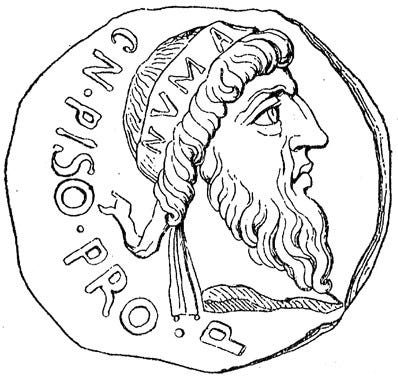
Following the mysterious death—or apotheosis—of Romulus, Rome entered a year-long interregnum in 715 BCE. During this period, the Senate rotated royal authority among its members, with each senator holding power for five consecutive days. This arrangement, born of necessity, soon bred factional strife between the original Romans loyal to Romulus and the Sabines who had integrated under the co-rule of Titus Tatius. After intense bickering, a compromise emerged: the Senate elected Numa, a Sabine approximately forty years old, as the second king of Rome.
Numa initially refused the crown. He argued that Rome, forged in the martial mold of Romulus, remained a nation steeped in war. It required a leader to command armies, not a man devoted to piety and reflection. Yet his reputation for wisdom and justice prevailed upon him. Accepting the throne, Numa reigned from circa 715 to 673 BCE, transforming Rome from a warrior state into a structured society grounded in religion, law, and civic harmony.
Symbols of Peace: The Temple of Janus and the Cult of Terminus
One of Numa’s earliest acts encapsulated his vision of peace. He constructed the Temple of Janus, whose doors served as a profound indicator of the city’s state: open in times of war, closed in peace. This innovation not only symbolized but actively promoted tranquility, a stark departure from Romulus’s bellicose legacy.
Numa also instituted the cult of Terminus, the god of boundaries. By honoring fixed limits—both literal and metaphorical—he fostered respect for property, borders, and social distinctions, laying foundational principles for Roman stability and law.
Reforming Time: The Creation of the Twelve-Month Calendar
Numa’s most enduring legacy lies in his overhaul of the Roman calendar, addressing the inefficiencies of the system attributed to Romulus. The original calendar was lunar-based, comprising ten months and totaling just 304 days:
March (1st month, named after Mars, god of war)
April (2nd, possibly from Aphrodite/Venus)
May (3rd, after Maia, goddess of spring)
June (4th, after Juno, queen of the gods)
July (originally Quintilis, 5th; later renamed for Julius Caesar in 44 BCE)
August (originally Sextilis, 6th; later renamed for Augustus)
September (7th, from septem, “seven”)
October (8th, from octo, “eight”)
November (9th, from novem, “nine”)
December (10th, from decem, “ten”)
This left a lengthy winter period unassigned to any month, causing perpetual misalignment with the solar year of approximately 365 days.
In 713 BCE, Numa added January (named after Janus, god of beginnings and transitions) and February (after Februus, god of purification), placing them at the year’s start and expanding the calendar to twelve months totaling 355 days. To bridge the remaining gap with the solar cycle, he introduced intercalation: the periodic insertion of an extra month, Mercedonius, every few years. This system, though imperfect, synchronized civic life with the seasons and agricultural rhythms, demonstrating Numa’s practical genius.
These reforms prefigured later advancements. In 44 BCE, following Julius Caesar’s assassination, the Senate honored him by renaming Quintilis as July for his societal contributions, including calendar refinements. Caesar’s Julian calendar further refined the solar year to 365.25 days, building directly on Numa’s foundation and influencing the Gregorian system we use today.
Organizing Society: The Establishment of Guilds
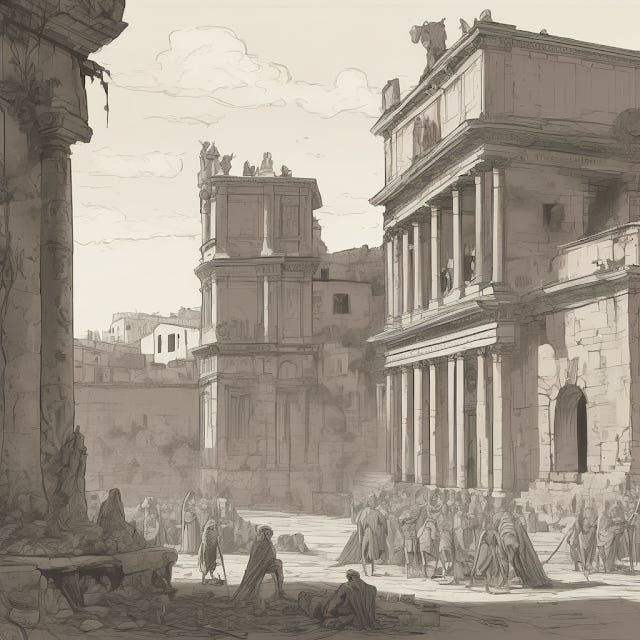
Numa extended his reforms to the social fabric, recognizing that a peaceful state required structured professions. As Plutarch recounts, he distinguished the populace by arts and trades, forming occupational guilds: musicians, goldsmiths, carpenters, dyers, shoemakers, skinners, braziers, potters, and all other handicraftsmen into a single comprehensive company. Each guild received its own courts, councils, and religious observances.
This division promoted specialization, reduced class tensions between patricians and plebeians, and instilled a sense of communal purpose. By institutionalizing trades, Numa wove economic order into the religious and civic tapestry he envisioned.
Numa Pompilius’s 42-year reign marked Rome’s pivot from conquest to cultivation. His reluctance to rule underscored a profound truth: true leadership often emerges from humility and introspection. Through temples, cults, calendars, and guilds, he imbued Rome with enduring institutions that outlasted his era. In an age of iron, Numa forged tools of bronze—subtle, sacred, and steadfast—ensuring that the city’s soul matched its growing strength. His depth lies not in spectacle, but in the quiet profundity of order amid chaos.